Not every tree that survives a Canadian winter makes a good windbreak. The species that work well in a shelterbelt share a few traits: tolerance for exposed conditions, reasonably fast establishment, and — critically — the ability to hold foliage or branch density at the height where wind protection matters most. This article works through the most reliable options province by province, along with the logic behind row placement.
Why Species Mix Matters More Than Quantity
A windbreak with 200 white spruce and nothing else is more vulnerable than one with 100 spruce, 60 green ash, and 40 Caragana shrubs. Diversity at the species level distributes risk. The spruce beetle that devastates one row cannot jump immediately to the ash. The Caragana at the base continues holding snow and breaking ground-level wind even when the taller rows need remediation.
Agriculture and Agri-Food Canada's shelterbelt research at Indian Head, Saskatchewan — which ran from 1901 until the program closed in 2013 — documented this consistently. The longest-surviving shelterbelts in the prairie provinces all contained at least three species, with conifers, deciduous trees, and a shrub component filling different vertical layers.
Species by Climate Zone
Zone 2 — Northern Prairie and Boreal Edge (AB/SK/MB north)
This zone spans roughly from Edmonton north into the Peace River country, and from The Pas north to Thompson. Winter temperatures below −40°C are possible. The standard combination here is:
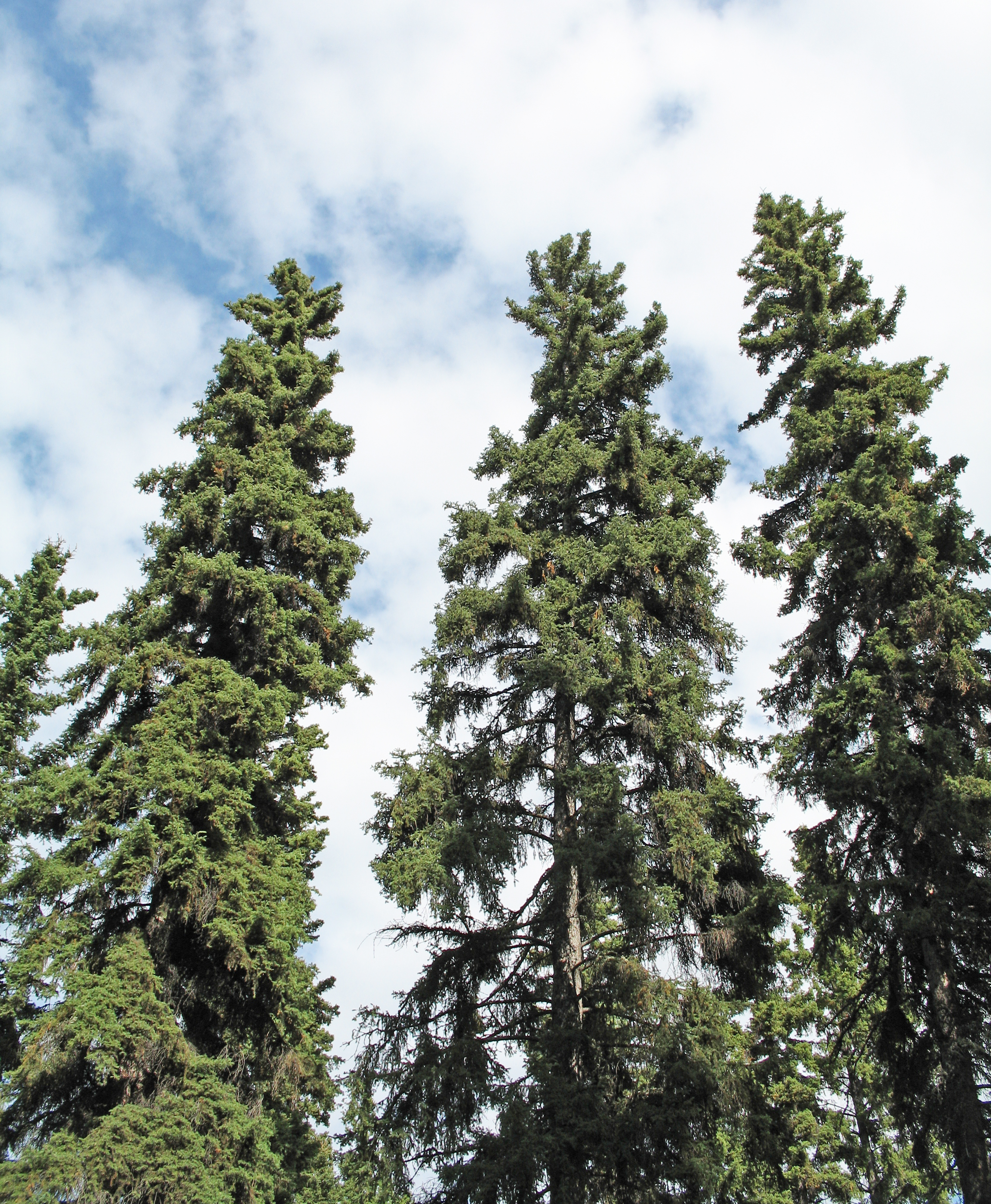
- White Spruce (Picea glauca) — Outer rows, full wind interception. Slow to establish (expect meaningful height by year 8–10) but extremely dense and long-lived. Hardy to −57°C. Performs on well-drained to moderately moist loam. Avoid waterlogged sites.
- Caragana (Caragana arborescens) — Inner or base shrub row. Fixes nitrogen, tolerates alkaline soils, fills from the ground up. Grows 2–4 m. Self-layers over time, closing gaps without replanting.
- Trembling Aspen (Populus tremuloides) — Fast-growing filler for middle rows in the first decade. Suckers aggressively, which is a disadvantage near gardens but useful for closing gaps in exposed rows.
Scots Pine (Pinus sylvestris) is an alternative outer-row conifer in Zone 2 on sandy or well-drained soils. It handles dry summers better than white spruce and maintains similar density.
Zone 3 — Central Prairie (Southern AB/SK/MB)
This is the classic shelterbelt zone — the area that the Indian Head Shelterbelt Centre was established to serve. Wind erosion is most severe here, and the species palette is correspondingly well-documented.
- Green Ash (Fraxinus pennsylvanica) — Middle rows. Grows 12–18 m, tolerates a wide range of soils including heavy clay and seasonal flooding. Fast-growing relative to spruce. Note: Emerald Ash Borer (Agrilus planipennis) is advancing westward in Canada; check current provincial quarantine maps before planting large ash volumes.
- Manitoba Maple (Acer negundo) — Inner row or gap filler. Very fast establishment, tolerates wet low-lying soils. Somewhat short-lived (40–60 years) and susceptible to ice storm damage, but useful where rapid wind reduction in the first five years is the priority.
- Siberian Elm (Ulmus pumila) — Drought-tolerant middle row option. Grows in poor alkaline soils where ash struggles. Short-lived (30–50 years) but establishes quickly and fills wind gaps effectively.
- Sea Buckthorn (Hippophae rhamnoides) — Shrub row. Fixes nitrogen, produces edible berries, roots deeply for slope stabilisation. Suckering habit makes it self-replenishing. Hardy to −43°C.

Zone 4–5 — Southern Ontario and Interior BC
These zones have milder winters but different challenges: ice storms in Ontario, dry summer winds in the Okanagan. The species options widen considerably.
- Eastern White Cedar (Thuja occidentalis) — Dense evergreen for outer rows in southern Ontario. Tolerates wet soils well. Slow-growing but extremely long-lived (200+ years).
- Eastern White Pine (Pinus strobus) — Fast-growing conifer for middle rows. Grows 30+ m at maturity. Best on well-drained sandy or loamy soils.
- Silver Maple (Acer saccharinum) — Inner row on moist sites in Ontario. Very fast establishment. Ice storm damage is a recurring issue — maintain as a secondary species rather than the primary one.
In BC's interior, Ponderosa Pine (Pinus ponderosa) performs on dry south-facing slopes. Douglas Fir (Pseudotsuga menziesii) is an option at higher elevations with reliable snowpack.
Row Placement Logic
A complete windbreak typically has three to five rows, each filling a different height niche:
- Outer windward row: Tall, dense conifers (white spruce, Scots pine). These take the full force of prevailing wind.
- Second row: Medium-height deciduous trees (green ash, Manitoba maple). Adds density at mid-canopy height.
- Inner rows: Additional deciduous or conifer species for depth.
- Inner shrub row (leeward): Caragana, Sea Buckthorn, or Wolfberry. Fills ground-level gaps and traps snow on the property side.
Row spacing is typically 3–4 m between rows and 2–3 m between trees within a row. Wider spacing early on can be filled in later if needed, but crowded rows thin themselves through competition — often removing the most desirable trees in the process.
Sourcing Planting Stock in Canada
Provincial forestry nurseries remain the most reliable and cost-effective source for windbreak species. Most provinces have minimum order requirements for bulk pricing, and stock often needs to be ordered a year in advance of the planting season.
- Saskatchewan: Provincial Tree Nursery, Indian Head (operated by Conservation and Recycling of Saskatchewan)
- Alberta: Alberta Tree Improvement and Seed Centre, Smoky Lake
- Manitoba: Provincial Tree Nursery, Hadashville
- Ontario: Ontario Tree Seed Facility, Angus
Bare-root stock planted in early spring (before bud break) has higher survival rates than potted stock planted later in the season. For most prairie locations, this means a narrow window in late April to mid-May.
What to Expect in the First Five Years
Year one is primarily root establishment. Above-ground growth is minimal for conifers — sometimes less than 10 cm. Deciduous species grow faster but are more vulnerable to drought stress in that first summer. Consistent watering at the root zone (not overhead spraying) makes a measurable difference in survival rates.
By year three, most deciduous species are showing 30–50 cm of annual growth. Conifers begin accelerating by years four and five. The transition from "newly planted row" to "visible wind reduction" typically happens somewhere in the five-to-eight year range, depending on species and site conditions.
Weed competition in the first three years is the most common cause of windbreak failure. Maintaining a 1-m weed-free zone around each tree — through mulching or mowing, not herbicide next to the root zone — is more effective than any other single management action.
Source references: Agriculture and Agri-Food Canada — Shelterbelts; Canadian Prairie Shelterbelt Project historical records, Indian Head, SK.